NFC SYSTEMS
Contactless access at 13.56 MHz.
A card or phone held near the reader, and the door opens. NFC identification is fast, contactless and runs on the ISO/IEC 14443 standard.
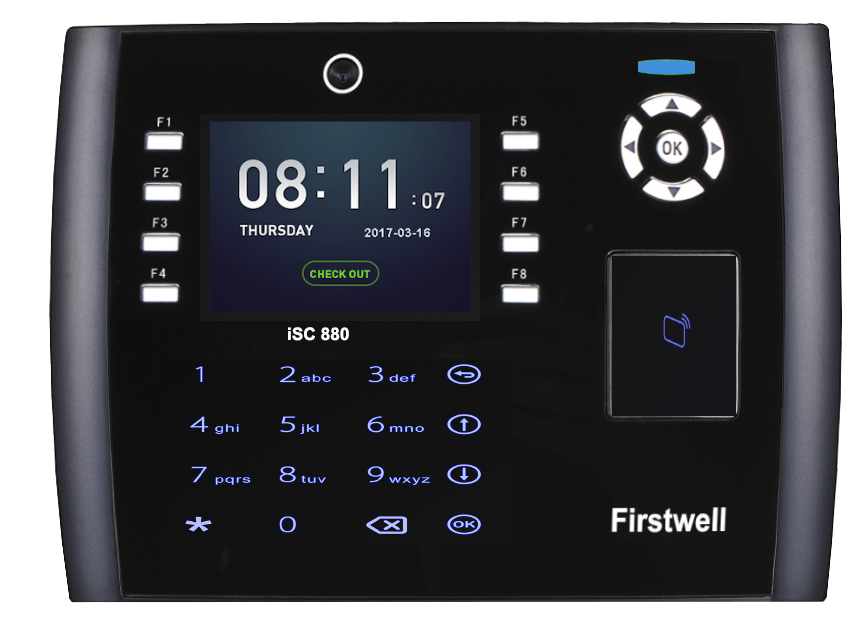
WHEN IT HELPS, WHEN IT DOESN'T
It makes sense when:
- You want contactless passage without physical contact.
- You use cards that already run at 13.56 MHz.
- You want the phone to be the key.
- You combine access with attendance.
It doesn't when:
- You have older readers without NFC support.
- A plain key lock is enough.
- You want a cardless system — then biometrics is an option.
FOUR STEPS
- Approach. The card or phone nears the reader.
- Read. The reader reads the identifier at 13.56 MHz.
- Check. The controller checks the access right.
- Open and record. The lock opens, the passage is logged.
SYSTEM ELEMENTS
- NFC readers. Porter readers for doors and passages.
- Cards and fobs. Contactless identification media.
- Controller. Decides on opening by rights.
- Electric locks. Open on signal.
- Software. Management and passage reports.
ILLUSTRATIVE EXAMPLE, NOT AN OFFER
An office building: NFC readers at the entrance and on each floor, a controller, staff cards, software for rights.
This is an illustration for orientation. The final design comes after a site visit.
WHAT THE TERMS MEAN
| Parameter | Meaning |
|---|---|
| ISO/IEC 14443 | Standard for contactless cards. |
| 13.56 MHz | NFC reading frequency. |
| Wiegand / RS232 | Reader-to-controller interfaces. |
Can I use my phone instead of a card?
Yes, with systems that support phone NFC. The phone becomes the key.
Is NFC secure?
NFC uses encrypted communication and reads at a short range, which makes interception difficult.
Can I keep my existing cards?
If the cards run at 13.56 MHz, often yes. We inspect and tell you what works.
The site visit and assessment are free of charge.
+381 11 241 81 81 · Mon–Fri 08:00–16:00 · monitoring 24/7